According to the Oxford Club, the bank is the worst place to keep our money.
We deposit our hard-earned money, they leverage it 10x, and make billions, while we hardly get anything in return. However, there is an alternative, a “29% Account” that pays out 72x more than a regular bank account.
The Teaser
Host Corinna Sullivan calls it “the single greatest thing we can do with our money.”
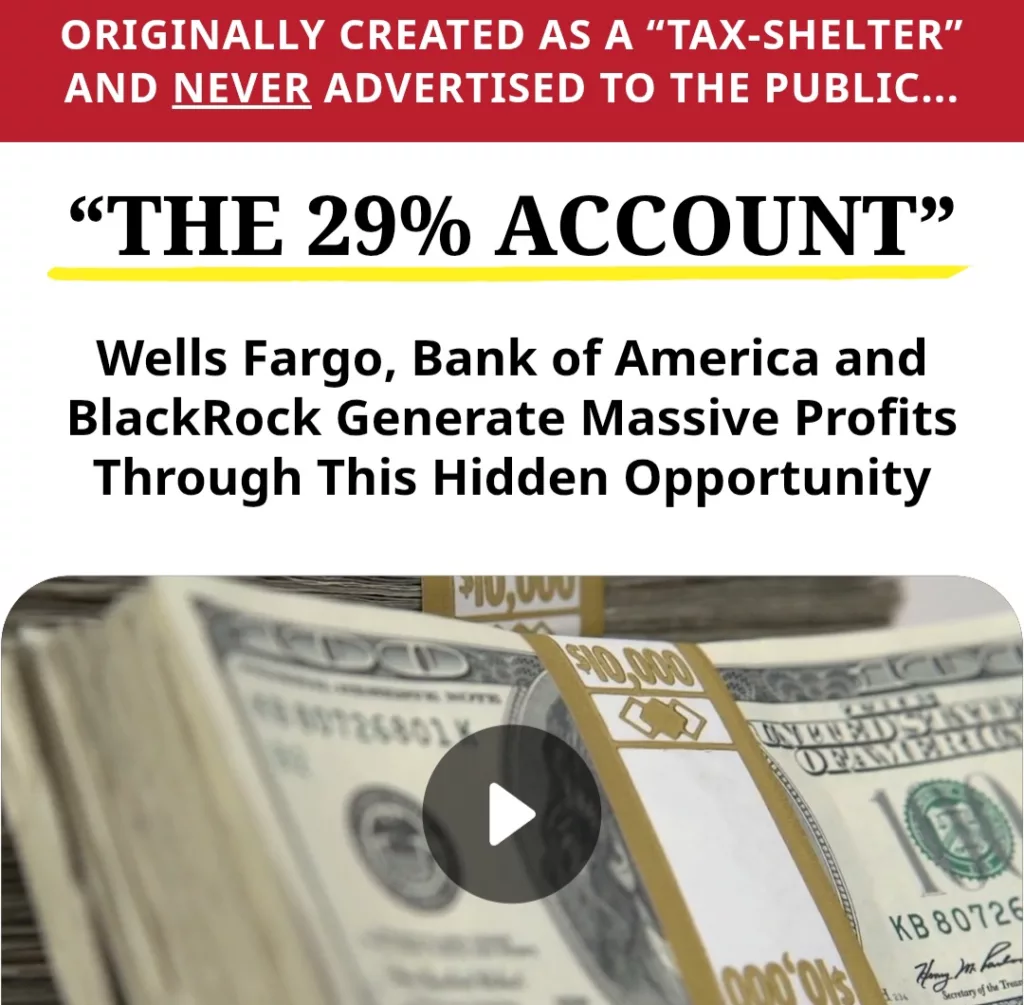
Income investing expert Marc Lichtenfeld agrees and says it's because the “29% Account” was specifically designed to create wealth.
We have previously covered Marc's Ultimate Dividend Package and Ultimate Passive Income Play teasers.
Safe to say, Marc likes ultimate things, and he makes the “29% Account” sound like the final boss of bank accounts.
There's no mass advertising for it and no physical branches with tellers waiting, so we can't just stroll in off the street and open one.
Per the name, some of the largest financial institutions in the world use it to earn 29% on their cash balances.
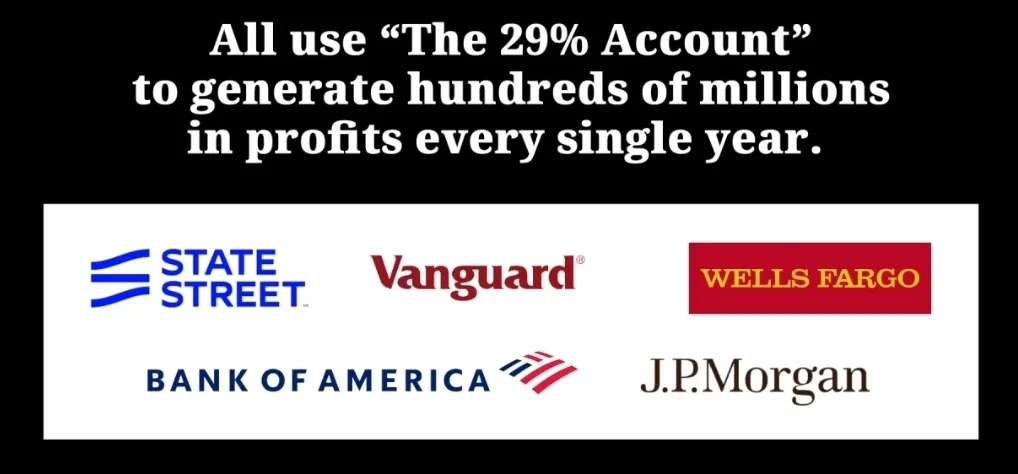
Is this junk bond investing or private loan sharking?
Apparently not, as Marc explains that anyone can open a “29% Account“, no matter the age, income level, or location.
The best part, we can “sign up for one online in five minutes or less.”
However, if one listens to more than five minutes of Marc's nearly hour-long video presentation, they'll discover that he's not talking about a bank account at all.
But rather
An asset that's averaged a 29% return over the past quarter century
In some years, this asset has even out-performed it's own average:
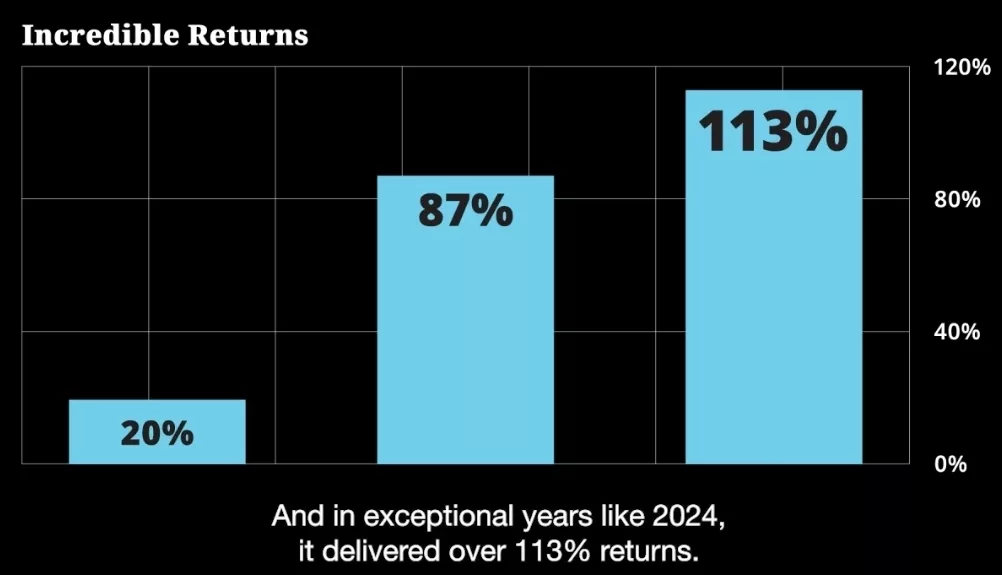
Overall, it's the third-best performing investment of the past two decades.
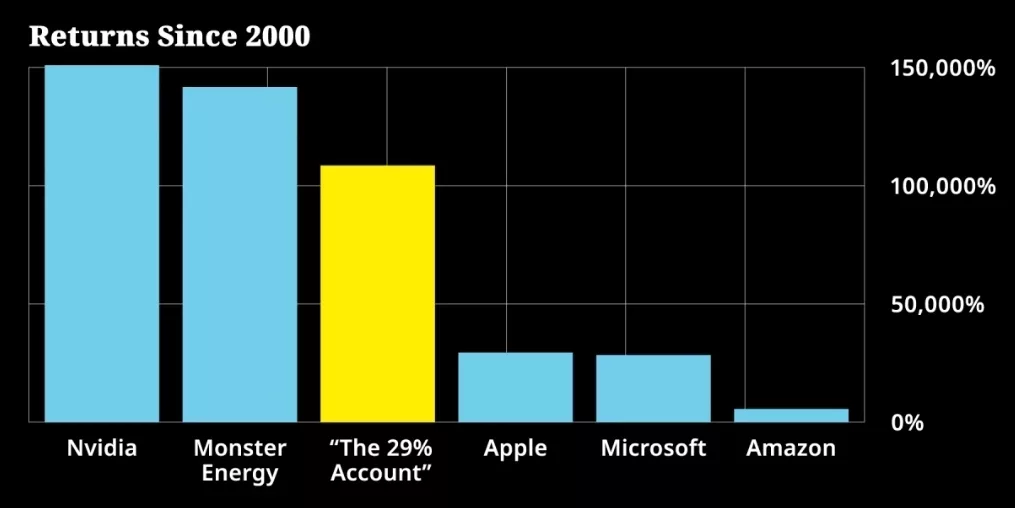
So what is Marc teasing here?
He's talking about literal dirt and a government land grant program started it all more than a century ago.
The Pitch
It's name is only revealed in a report dubbed The 29% Account: Accessing America's Secret Trust Fund.
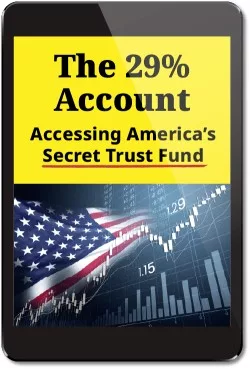
The report is “free” for all new Oxford Income Letter subscribers, with a subscription costing $99 upfront for the first year (normally $249).
The Wild Wild West
It's the mid-1800s, you're getting up early, plowing the land, and kicking up your feet at night under the glow of a kerosene lamp.
This is where Marc's story starts.
During this time, agriculture was still the backbone of the economy, but change was afoot.
Industrialization was sweeping the country, including the West, which the government desperately wanted to develop.
To incentive this, the federal government implemented a railroad grant program between 1850-1870.
For every mile of rail put down by a railroad company, the federal government would grant it free public land to keep building out their rail networks connecting far-flung cities.
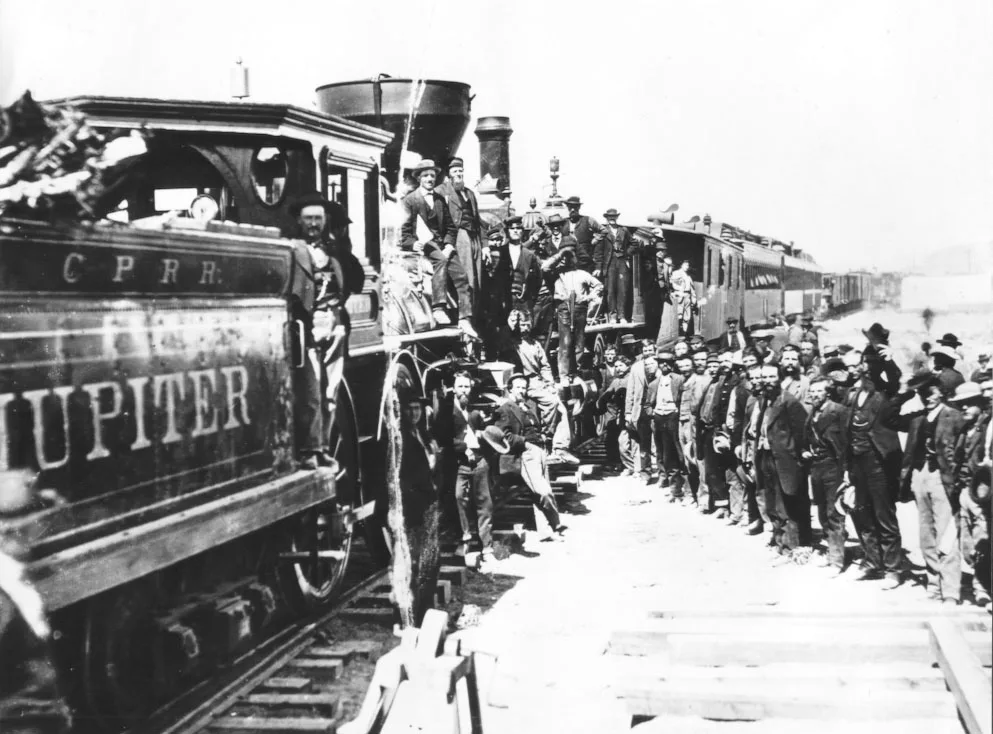
All told, approximately 130 million acres of public land was granted to railroad companies during this time period.
However, even with such generous land grants, building and maintaining a railroad was expensive business, and some inevitably failed.
This is how the “29% Account” that Marc is teasing got started.
See, whenever a railroad failed, it's bankers would organize it's remaining assets, mostly the free land it had been granted, into a trust, and issued certificates of ownership to shareholders.
Most cashed these out immediately, accepting pennies on the dollar for their stakes, and cutting their losses.
In hindsight, this was a huge mistake.
That's because not only did the land grants contain surface building rights, but more importantly, they also held below surface mineral rights.
As it turns out, this middle-of-nowhere land in the wild West contained some of the richest oil and gas deposits anywhere in the world. We're talking billions of barrels of crude and trillions of cubic feet of natural gas.
The best part is, one of the trusts originally set up to distribute bankrupt railroad land still exists today and, on average, it's returned 29% annually for the past two decades.
Let's find out what it is.
Revealing The Oxford Club's 29% Account
Marc led us on a treasure hunt with this teaser and these are the final clues before we get to claim our prize:
- This is a 137-year-old trust that owns some of the most resource-rich land in the country.
- It also pays a healthy dividend, distributing $347 million to shareholders last year.
Marc is talking about Texas Pacific Land Corp. (NYSE: TPL).
- TPL is the successor corp of the trust organized on February 1st, 1888. So 138 years ago today.
- It is the largest landowner in the State of Texas, with some 882,000 acres and has paid a regular dividend for the last 23 years.
The Ultimate Set It and Forget It Investment?
Admittedly, I am a little biased when it comes to land, energy, and water investments.
For starters, tangible, hard assets underpin life as we know it.
The fresh fruit and vegetables we eat, arable land is needed to plant seeds, cultivate, and grow them at scale.
In order to do this, gallons of water are also needed.
Finally, without energy like oil and gas, the fruit and vegetable crops cannot be transported to grocery stores in the city where people buy them.
Food is one of the most glaring examples, but substitute any physical product or digital service, and the need for one of the big three of land, energy, or water, quickly becomes apparent.
Over the long-term, if purchased at decent entry prices, this makes such investments compounding machines.
The definition of set it and forget it.
The second reason I am slightly biased is because I personally own shares in Texas Pacific Land Corp.
After running up for the past few years, shares are much more expensive today, so it's not the best entry point. But I'm not selling for a few reasons.
The first is the large land holding, which will only increase in value over time, as they're not making any more of it.
Second, around 207,000 acres are situated in the highest-producing oil field in the U.S., Texas' Permian Basin and the acreage holds massive oil reserves:
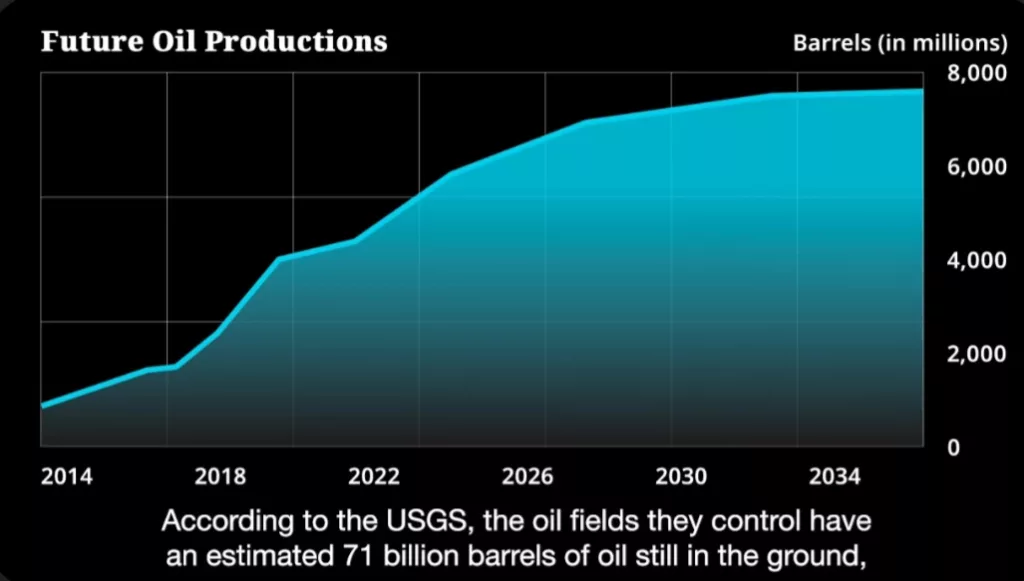
Lastly, management's long-term approach to land and resource management lets me know that decisions to sell, lease, or develop the land won't be made to ‘make quarterly earnings.' Value will be maximized.
Perhaps with the exception of today's entry price of nearly 25x book value, the old adage of “don't wait to buy land, buy land and wait“, still rings true.
Quick Recap & Conclusion
- The Oxford Club and Marc Lichtenfeld are teasing a “29% Account” that pays out 72x more than a regular bank account.
- It turns out, what's being teased isn't a bank account at all, but rather an asset-based investment that has returned, on average, 29% annually over the past two decades.
- It's name is only revealed in a report dubbed The 29% Account: Accessing America's Secret Trust Fund. We'll need a subscription to the Oxford Income Letter, which costs $99 upfront for the first year (normally $249).
- Not a bad price, but not as good as free! The “29% Account” is Texas Pacific Land Corp. (NYSE: TPL).
- TPL currently trades at a hefty premium of 25x book value, but its otherwise a solid real estate, energy, and water infrastructure pick.
How expensive will essential resources like water and oil be in the future? Leave your thoughts in the comments.
*The author owns shares in Texas Pacific Land Corp. (NYSE: TPL).