
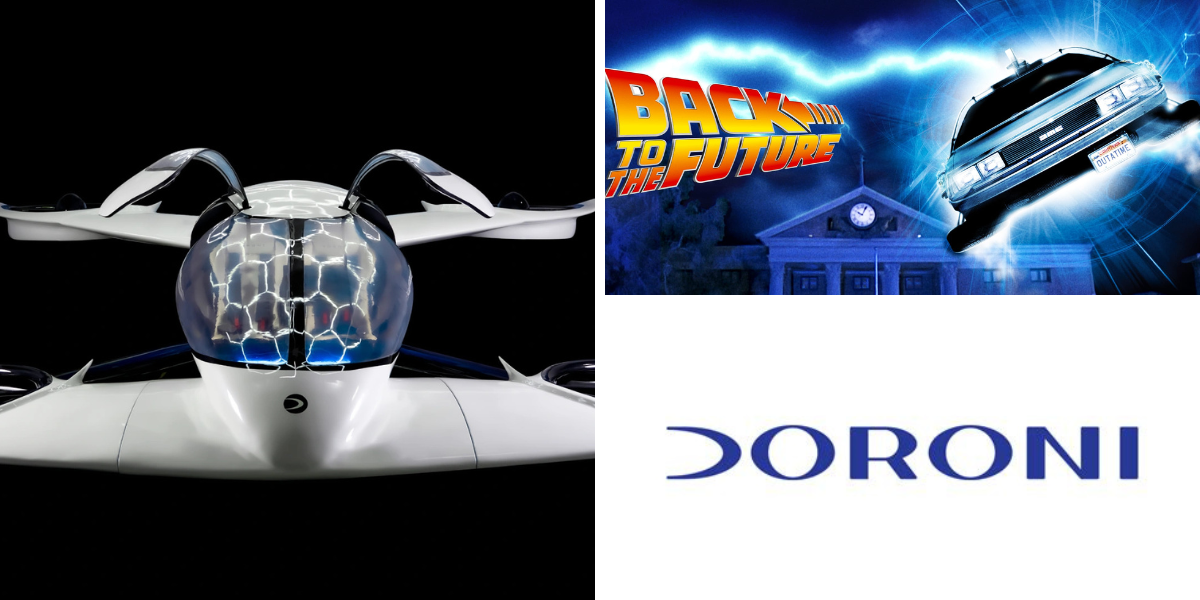
A man, a garage, and an innovative new technology.
If the story sounds familiar it’s because Doroni Aerospace is following the same blueprint as some of the most successful startups in history, but will it make just as good an investment?
The March of Progress
From our ancestors migrating barefoot across continents to wheeled chariots during Roman times, and supersonic jets that can travel faster than the speed of sound today.
Humanity’s progess has been constant and personal flight represents the next logical step in our evolution.
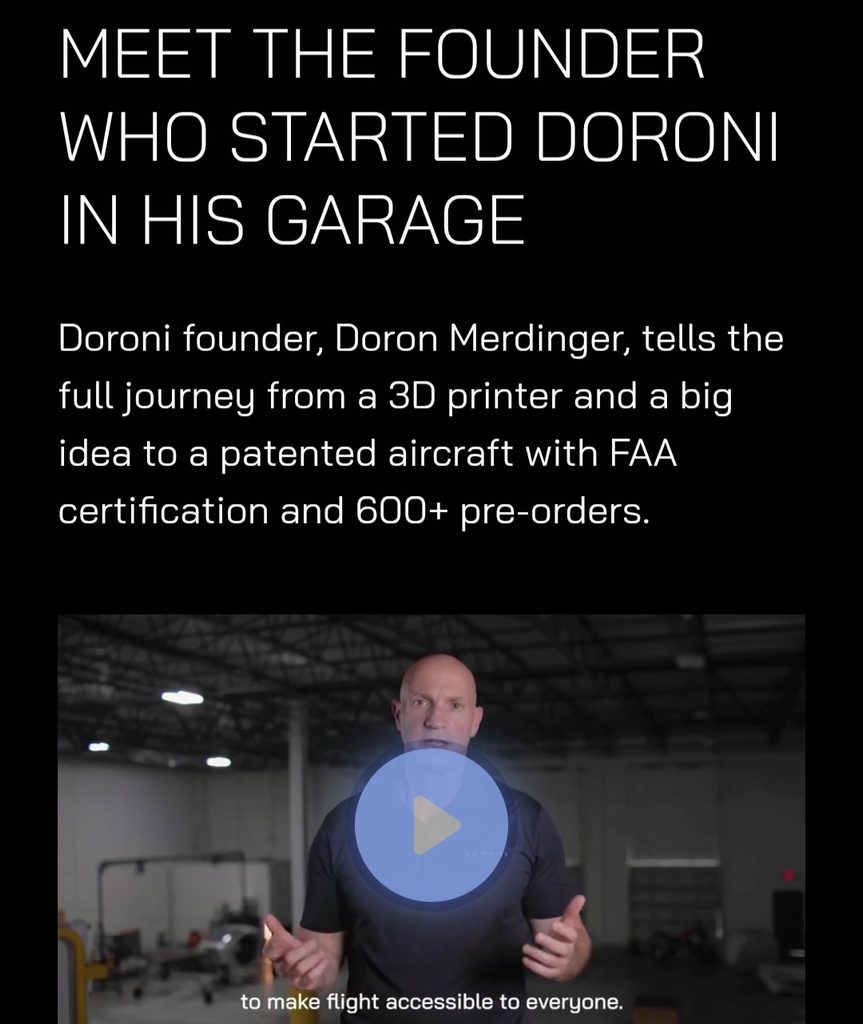
One man, Doron Merdinger, has set out to make this a reality from his home garage in Pompano Beach, Florida.
Doroni is the latest in a long line of Regulation-A stock offerings that we have reviewed here on Greenbull, including EnergyX and it’s crazy valuation, as well as Immersed’s convertible note pitch.
A scrappy underdog attempting to do the impossible will always be a story that sells, certainly much more than a well-capitalized giant trying to move into and monopolize yet another industry. As usual, the truth is somewhere in the middle.
Doron, our man in the garage, comes from a family of craftsmen and entrepreneurs, while having a background in microelectronics, computer science, and business management himself.
He headed up his family’s business, Hazorfim, an established silver fabricator, for years before branching out on his own and founding Doroni Aerospace in late 2017.
So he’s not your average layman in his garage, but Doron is not a multinational either. He’s somewhere in between.
For the past nine years, Doron has built a team which includes a Chief Engineer with 20+ years of aerospace and robotics experience and a Chief Systems Engineer whose real first name is Czar. Raised more than $50 million in capital across multiple rounds, and developed a working prototype of a personal aircraft for everyday travel that is compact, easy to operate, and aligned with Federal Aviation Administration (FAA) safety standards.
The end goal is simple, but far from easy, fundamentally change how people move and commute.
Doroni says it’s tech works and believes it is now one step away from commercial deliveries.
What is Doroni?
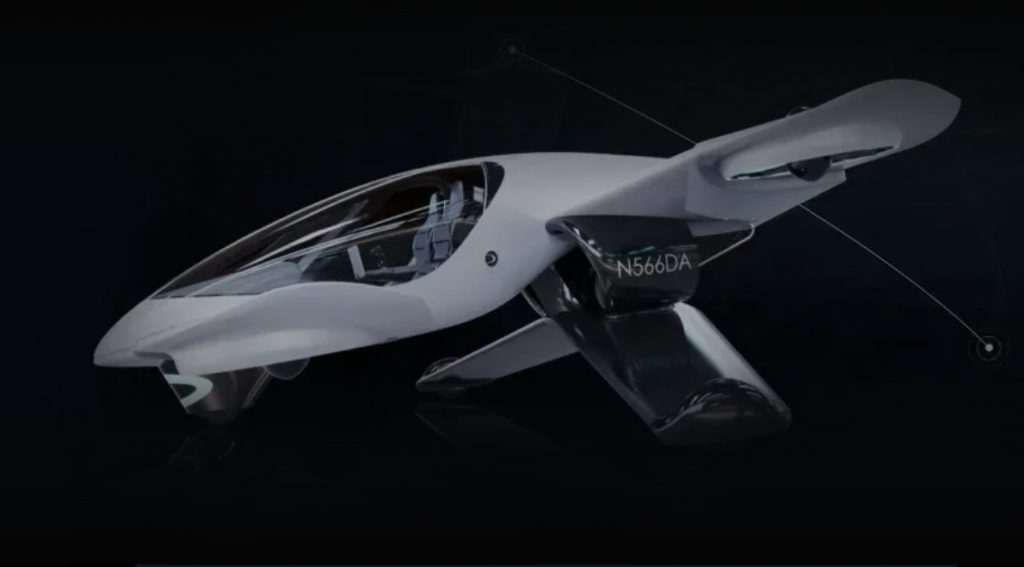
Doroni is a pure-play electric vertical takeoff and landing (eVTOL) aircraft manufacturer. In other words, it makes flying cars like Doc Brown in Back to the Future.
Two seats, a top speed of 120 miles per hour (mph), and a 100 mile range, with a 25-minute charge time.
Personal aircraft is projected to become a $1 trillion dollar industry by 2040, with Silicon Valley startups such as Joby Aviation and Archer Aviation competing with major corporate subsidiaries like Wisk Aero (owned by Boeing), and international firms to be first to market.
As I write this, no would-be Wright Brothers-esque operator has its eVTOL aircraft freely flying around the skies. However, some are close, including Doroni.
Per the latest update on it’s investor relations page, Doroni is currently finalizing all core systems (flight controls, propulsion, safety), and preparing its H1-X prototype for flight testing.
It is targeting 2027 for the latter, while working closely with the FAA on certification requirements. Barring any major setbacks, the first units of its personal aircraft will be delivered in 2028.
The Next Major Phase
Before we get too excited that we will be able to fly over to grandma’s house for Christmas this year, there are some tough questions that need to be answered.
The first that comes to mind is what exactly the regulatory approval process looks like for something like this?
Per the FAA’s rulebook, all eVTOLS require separate approvals for aircraft design, certification for the factory that actually builds it, each individual aircraft that rolls off the assembly line, the pilots who fly it, and finally, the vertiports where it lands.
It’s a multi-year, multi-stage process that continues after initial approval.
Doroni is has made it partially through this regulatory gauntlet, having been granted a Special Airworthiness Certificate by the FAA for prototype testing.
To date, more than 70 test flights have been completed with the H1-X and other initial prototypes, which were among the first eVTOL test flights in the United States.
The regulatory hurdles are being cleared, the showroom is getting built, more than 600 pre-orders have been taken, and Doroni is almost ready to take to the skies. But does major innovation equal a good investment?
Is Doroni A Good Investment?
On the surface, Doroni’s pitch is simple and straightforward.

However, things aren’t always as they seem.
The type of security may read equity, but in the fine print we learn the offering isn’t for regular old common shares, it’s for Series Seed-3 Preferred Stock.
This is starting off on the wrong foot, as these are non-voting shares created to not dilute the founder, while retaining complete control, and continuing to raise more capital.
Overall, Doroni’s capital structure breaks down like this:
- Class A Common Stock (16,963,578 shares outstanding)
- Class B Common Stock (1,000,000 currently outstanding)
- Series Seed-1 Preferred Shares (2,501,218 outstanding)
- Series Seed-2 Preferred Shares (2,368,402 outstanding)
- Series Seed-3 Preferred Shares (13,387,966 outstanding)
Each preferred share is convertible into a share of Class A Common Stock.
Assuming all convert, that would balloon Doroni’s common share count to 35,221,164 shares outstanding. At a $3.72 per share valuation, that would give the company a valuation just north of $131 million.
If we also add in options, warrants, and authorized, but not yet issued common and preferred shares, we get up to 60,769,105 shares. This would bring the implied valuation up to $226 million, assuming a $3.72 share price.
What would we receive in return?
Besides a Doroni t-shirt and hat that would come along with our share purchase, we would get an equity stake in a nine year old business that is still pre-revenue, losing around $4 million annually, and has less than $150k in cash on hand (about half a month of operating expenses).
At the current offering price, Doroni is not a good investment.
But before we outright dismiss the opportunity, is there anything that would make us take another look?
One glimmer of hope is the 600 pre-orders of the H1-X prototype mentioned earlier. At a reported starting price of $400k, this would bring in an estimated $240 million in revenue, that is if all go through with their purchase (unspecified deposits have been made). If this happens we would be paying less than 1x sales for a growing business with some barriers to entry.
A lot of this implied growth is dependent on Doroni executing it’s go to market strategy, per the offering circular:
We anticipate that we will operate direct sales channels primarily to first responders, police markets and high net worth flight enthusiasts, brand experience stores, pop-up locations in key U.S. and European markets, as well as online sales
I have some reservations about this as direct sales are more capital intensive than an in-direct dealer model. For an unproven model like eVTOLS, it could be a slow slog.
In closing, a lot has to go right for us to get a decent, not even a good, entry price. We are still two years away from any of this potentially happening, on even the most aggressive timeline, so I am out on Doroni at the current offering price.
Quick Recap & Conclusion
- Electric vertical takeoff and landing (eVTOL) aircraft manufacturer Doroni Aerospace is raising a fresh round of capital via a Regulation A equity offering.
- Doroni has raised $58 million across nine prior funding rounds and is looking for one final raise to get it across the last regulatory hurdle it needs to clear to bring it’s H1-X eVTOL prototype to market.
- The offering is aiming to bring in as much as $41 million at a $226 million valuation.
- Doroni is pre-revenue, losing around $4 million annually, and has less than $150k in cash on hand.
- Doroni is still two years away from commercial operations at the earliest, so it is not a good investment at today’s offering price.
Are you investing in the eVTOL space? Let us know in the comments.