We are reader-supported. This page contains affiliate links, which means I may earn money if you buy something through any link on this page.

After Reviewing Hundreds of Stock-Picking Services, Here’s One That Stands Out — But Not for the Reasons You Might Think
Most stock advisories promise a lot but deliver far less.
That’s why I started Green Bull Research.. to break down what these services are actually selling, and to separate the few that are useful from the many that aren’t.
Every now and then, a service stands out.. not because of hype, but because of how it actually operates.”
In a nutshell, the service I’ll be discussing here is a newsletter run by a small team of investors focused on finding deeply out-of-favor opportunities.
In their marketing, they often talk about the potential for large upside.. sometimes framing ideas as 3x–10x opportunities.
Their approach is to focus on sectors that are currently unpopular and lack investor capital.
This falls under what’s often called ‘asymmetric investing’.. where the upside on a successful idea can outweigh the downside.
In practice, though, that doesn’t mean low risk. It usually means uncertainty is high, but the payoff can be significant if the thesis plays out.
I’ll get into the details on what they look for, why it’s low risk (lower than normal), and how they select their stock picks in more detail shortly.
Before getting into the details, here’s some quick context on where this analysis is coming from.
I’m Anders, founder here at Green Bull Research.
I started Green Bull Research in 2020 after seeing how many investment newsletters rely on aggressive marketing and don’t deliver.
Since then, we’ve analyzed and broken down hundreds of these teasers.. figuring out what’s actually being teased and whether it holds up.

Most Investment Advisory Services Are Over-Hyped And Don’t Perform Well
Most advisory services don’t fail because they know nothing about markets. They fail because the business model rewards promotion more than performance.
In too many cases, the real skill is marketing the next idea, not compounding capital for subscribers.
That’s why I’m careful about recommending any service at all.
What makes this different is not that it has no marketing at all. It’s that the service appears to be built around the research first, with the promotion coming second.
That matters, because in this business the incentives usually run the other way.
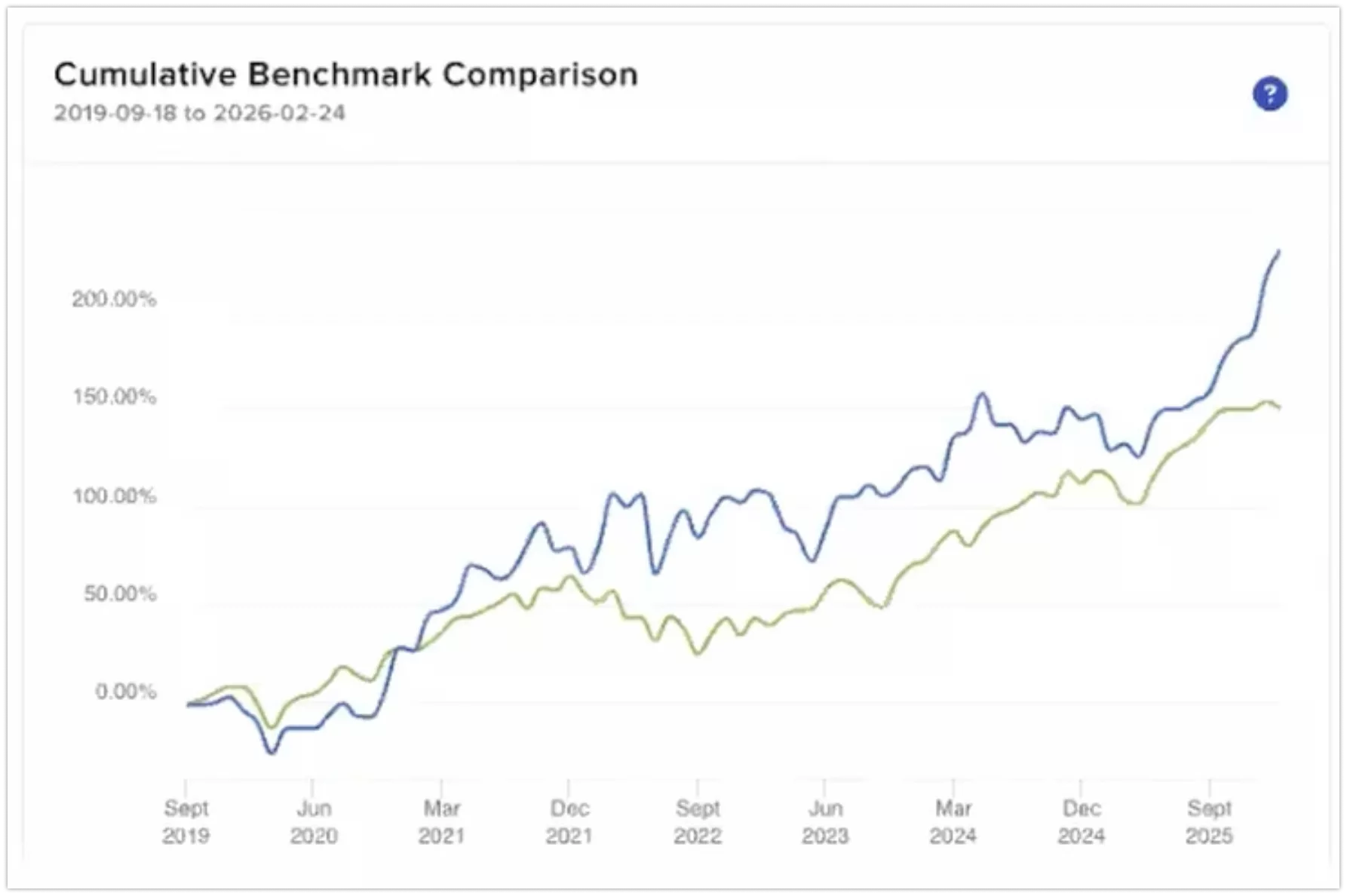
And at least based on the performance record shown below, that difference has translated into stronger results than the broader market over this period.
The chart below shows their portfolio (BLUE line) up well over 200% vs the S&P 500 (GREEN line) which is under 150% going back to fall of 2019.
This advisory service’s niche is looking at sectors and situations most conventional managers avoid, not because they are automatically attractive, but because that neglect can create unusual price dislocations.
It’s called the Insider Newsletter, and the professional money managers running it look for stocks most money managers would typically avoid entirely…
In practical terms, Insider Newsletter is a bi-weekly macro-and-ideas newsletter. It combines market commentary with contrarian investment setups that tend to be outside the usual mainstream focus.
The basic playbook is to look at sectors that are out of favor, under-owned, and in some cases priced as if the future will be much worse than it likely will be.
That can create asymmetric setups. But that does not mean low risk in the ordinary sense. It usually means the market has become deeply pessimistic, and they believe that pessimism has gone too far.
That distinction matters.
Asymmetric Returns by Investing In Out-Of-Favor Stocks
When they talk about “out-of-favor” investments, they’re not just talking about cheap stocks.
They’re usually looking for sectors that:
- have been ignored or avoided
- are unpopular for political or social reasons
- but are still essential to how the world functions
That combination is what creates opportunity.
The best way to understand their approach is through examples. These charts on pages 8–9 show the type of setup they are looking for: long, ugly stretches where capital has left the sector and sentiment is deeply negative.
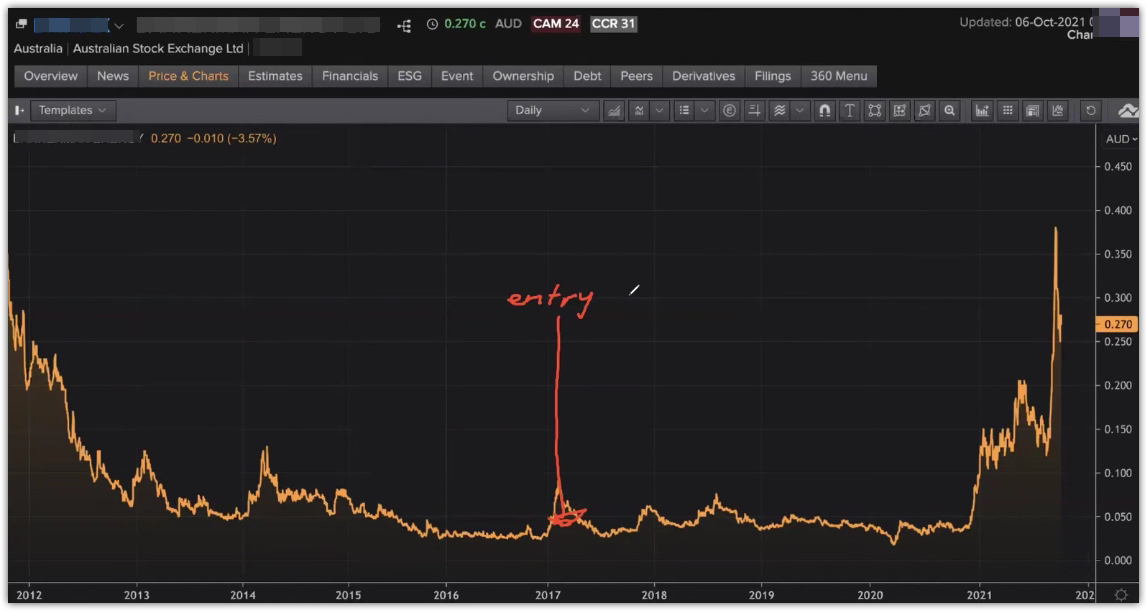
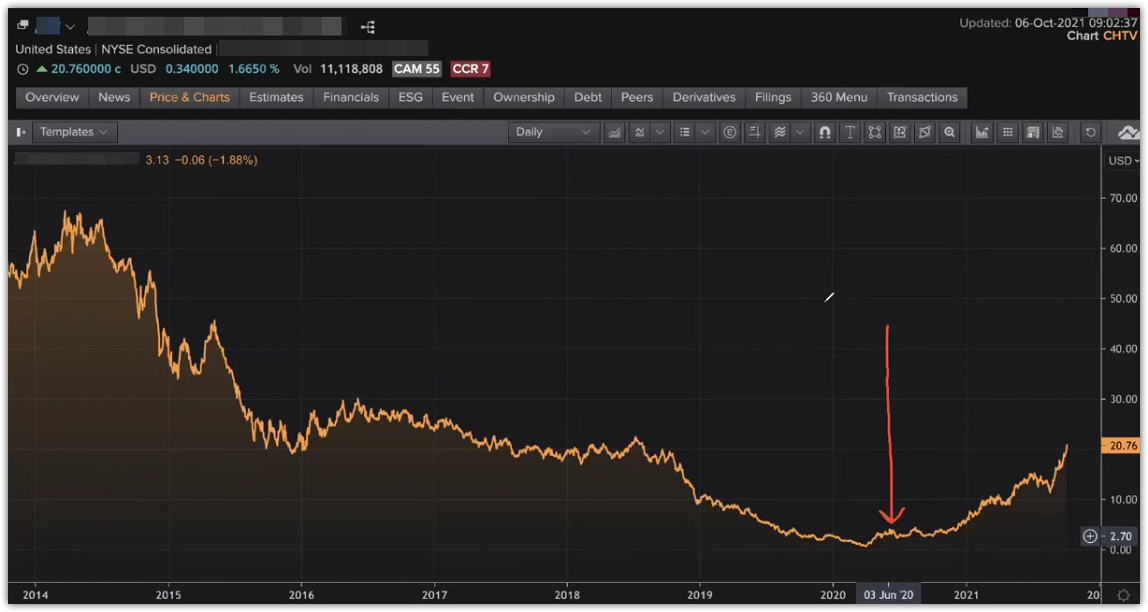
The point is not that they can perfectly call bottoms every time. It’s that they are willing to look where most investors have already given up.
Sometimes that patience pays off quickly. Sometimes it takes years. That is a much more realistic way to frame the strategy.
In practice, they’re trying to find situations where expectations have become so negative that even a partial recovery can lead to outsized returns.
The way they describe it internally is pretty blunt:
“We’re buying these things when they’re absolute toxic waste”.
Brad McFadden
“I engineer my portfolio so that even if I’m right only 25% of the time, I’m still profitable.”
Chris Macintosh
If that approach works, you would expect to see it show up in long-term results.. and this is what the track record below is meant to show us:
Again, the blue line tracks their portfolio.. up 200+% since 2019 and greatly outperforming the S&P 500.
The chart above shows how their portfolio has performed relative to the S&P 500 over this period.
It’s a solid result, but more importantly, it reflects the kind of approach we just went through: concentrated bets in deeply out-of-favor areas that eventually recover.
That said, performance like this doesn’t come in a straight line, and it depends heavily on timing, patience, and execution.
Is it too late to join?
That’s harder to answer.. and it depends on how you think about the strategy.
This isn’t a service where timing a perfect entry matters as much as understanding the broader themes they’re positioning around.
Some of their ideas may already be in motion. Others are likely still early. And some won’t work at all.
So whether it’s ‘too late’ really comes down to whether this style of investing fits how you approach the market.
To understand how they approach this in practice, they’ve outlined a 5-part framework that explains how they find ideas and structure their portfolio.
In a nutshell..
Step 1: First, they look for asymmetric opportunities. They start by looking for areas where the potential upside is meaningfully larger than the downside, typically because expectations have become overly negative.
Step 2: They take a global view and identify sectors where this asymmetry lies. What’s going on at a global scale? Where is the money flowing behind the scenes? Rather than single out stocks to invest in right off the bat, they look at entire sectors, “investing in the tide, rather than the boats on it.”
Step 3: Then comes the stock selection, where they go about using stock screening tools and evaluating companies to ensure that they have a small basket of healthy stocks (5-10) representing the sector they’re targeting well.
Step 4: When allocating capital to each position, they look to reduce risk by position sizing, which is structured so that a small number of successful ideas can outweigh multiple smaller losses.
Step 5: Remember, they’re investors, not traders. So there isn’t that much action going on when it comes to portfolio management. They monitor their positions and take action when needed, but generally look to hold stocks for ~5 years. So mostly it’s a waiting game where you can go about your life as normal.
Where This Approach Can Break Down
It’s also worth pointing out where this approach can struggle.
If capital doesn’t return to a sector, or if the underlying thesis is wrong, these positions can stay depressed for long periods.. or never recover.
This isn’t a strategy built around certainty. It’s built around probabilities.
Run by professional money managers, not “talking heads” in the media
One reason Insider Newsletter stands out is that it is written by people whose background is in managing money and structuring portfolios — not just publishing market commentary.
That does not guarantee better results, but it does change the focus. The writing is generally driven by positioning, risk, and thesis development rather than headline-chasing.
Chris Macintosh (the main guy behind it all)

Chris Macintosh is the main public face of the service. His background includes work in investment banking and private capital, which helps explain why the newsletter tends to think in terms of themes, capital flows, and portfolio construction rather than just isolated stock tips.
That background is relevant here because Insider is not really a ‘pick sheet.’ It is closer to a thesis-driven investing service.
Another advantage of the service is that it seems to draw on a wider network of market relationships and on-the-ground perspective than you typically get from mass-market newsletter publishers.
Brad McFadden (behind the scenes)

The research side is not just a one-man show. Brad McFadden appears to play a substantial behind-the-scenes role in screening, research, and trade execution.
That matters because one of the strengths of the service is not just the macro narrative, but the translation of that narrative into actual baskets, position sizing, and implementation.
What you get with the Insider Newsletter
At a high level, Insider Newsletter is a ~bi-weekly research-driven newsletter. But what matters more is how the information is delivered and used.
Essentially, the Insider Newsletter is a curated report of what Chris and Brad, drawing on their experience managing capital and evaluating opportunities in real markets, find to be important enough to share.
What you won’t get:
- Constant trade alerts
- Step-by-step hand-holding
- Guaranteed short-term results
The pace is slower, and the focus is on letting themes develop rather than constant trading. The real value isn’t just the individual picks, it’s how the ideas are framed and connected.
This type of service only works if you’re willing to think independently and take a longer-term view.
A typical issue looks something like this:
- A broad macro overview (what’s happening globally and why it matters)
- Breakdown of specific sectors or themes (where capital is moving, where it’s not)
- Deep dives into mispriced or overlooked opportunities
- The “Big Five” — a shortlist of long-term setups worth paying attention to
The focus is less on individual stock tips and more on understanding:
- where money is flowing
- which sectors are being ignored
- and where pricing doesn’t match reality
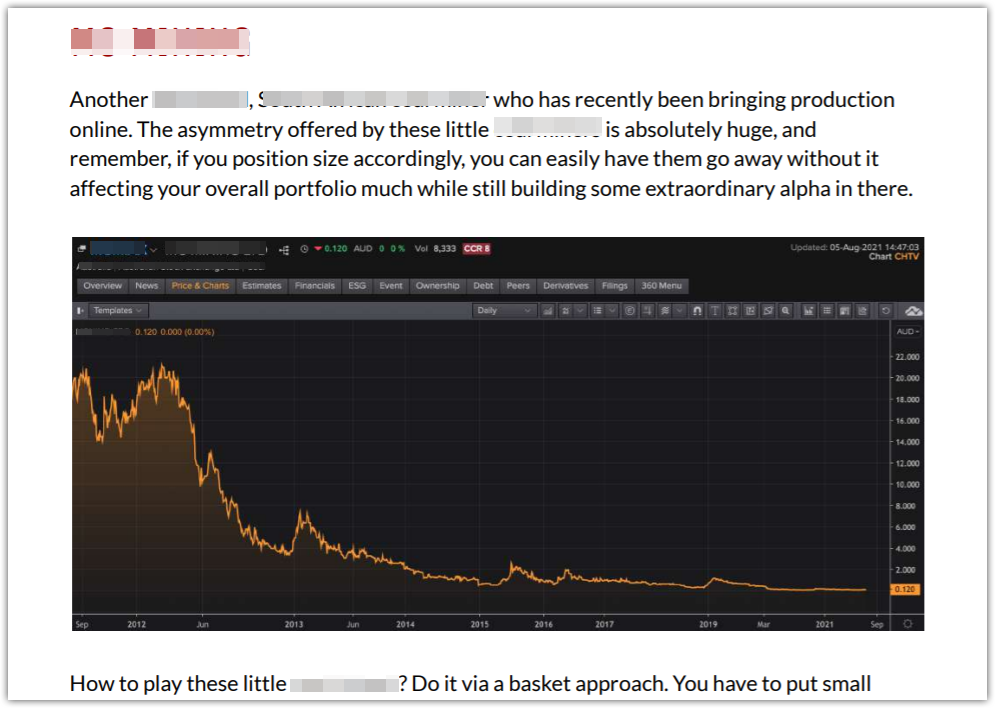
The “Big Five” section at the end is where you’ll find..
"Five interesting long-term setups - unloved and totally off the radar of the average fund manager."
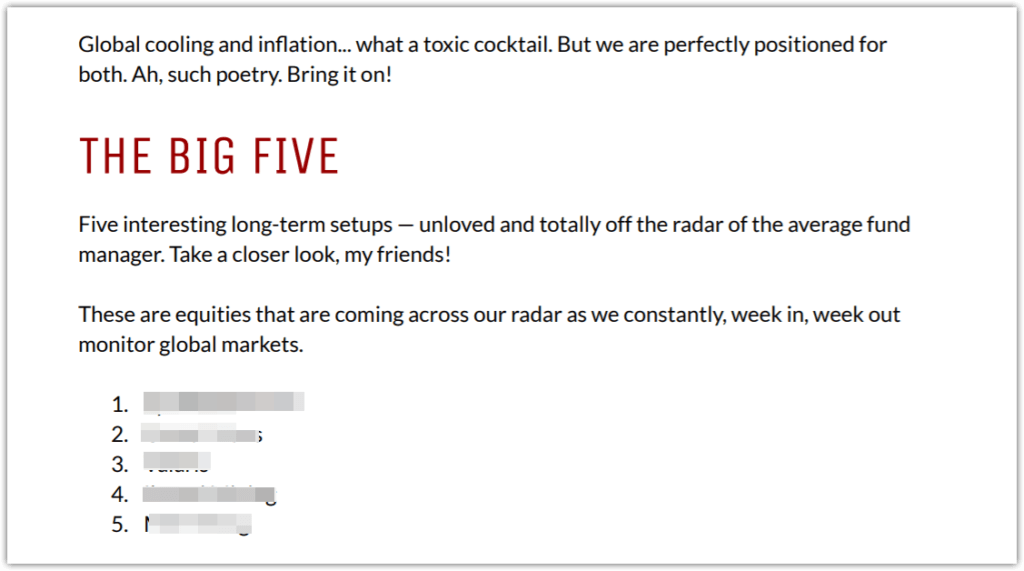
And charts to back up their reasoning..
Who This Is For
This tends to work best for people who:
- are comfortable going against the crowd
- don’t need constant updates or trade alerts
- and are willing to wait for ideas to play out over time
If you’re looking for something faster-moving or more hands-on, this probably won’t be a great fit.
How to Join
If you’ve read this far, you should have a pretty clear sense of what this is — and what it isn’t.
For the right type of investor, it can be a useful service. For others, it won’t be a fit.
If you want to explore it further, they currently offer a $1 trial for the first month, which gives you a low-cost way to see how the research is structured and whether it aligns with how you think about investing.
After the trial, it moves to the standard monthly price. Whether that’s worth it depends entirely on whether you actually use the research and act on it.
*Latest issue sent out immediately upon joining.